Party-wall soundproofing in Singapore
Condos, landed homes, and home studios each transmit noise differently — through a shared party wall, a floor slab, a window facing the road, or all three. We diagnose the actual path before proposing a fix.
General information, not compliance or cost advice. Approval processes, fees, and typical pricing described here are general background — always confirm current requirements with your MCST/management corporation and get a site-specific quote before budgeting a real project.
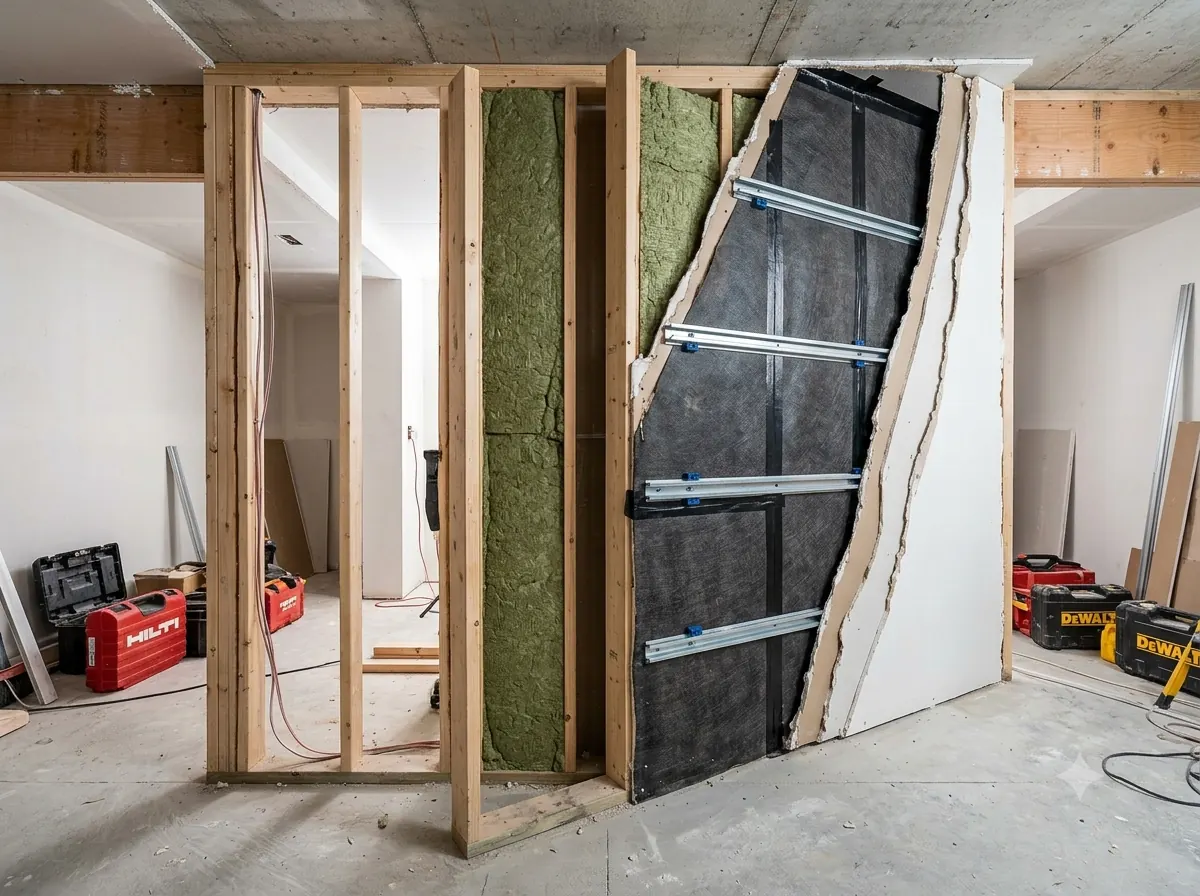 Party-wall sound isolation — home theatre
Party-wall & floor sound isolation
A shared wall between units is rarely the weak point people assume — flanking paths through the floor slab, service ducts, and window reveals often carry more sound than the wall itself. We assess the full transmission path and target a Sound Transmission Class (STC) rating appropriate to the noise source, using staggered stud construction, resilient channels, and mass-loaded vinyl where the existing wall needs additional mass rather than a full rebuild. (See STC vs NRC, explained for how this rating is measured and why higher isn't always simply "thicker".)
BWindow & façade upgrades
Units facing an expressway, an MRT line, or a busy junction often have their noise problem coming through the glass, not the wall. Laminated or double-glazed acoustic glass, upgraded seals, and reveal detailing can meaningfully cut road noise without a full window replacement in most cases.
CHome theatre tuning
A dedicated media or listening room has two separate requirements: keeping bass-heavy sound from disturbing the rest of the home (isolation), and making the room itself sound good (absorption and diffusion). We treat these as separate design problems — a room-within-room build-up for isolation, paired with an interior acoustic treatment plan for the listening experience.
Typical scope: an on-site noise/flanking-path assessment, a target STC set for the specific noise complaint, and a build-up plan that respects MCST (for condos) or URA renovation guidelines (for landed homes) before any work begins.
Frequently asked
What STC rating do I need to stop hearing my neighbours?
It depends on the noise source — voices, footsteps, and music each need a different target — which is why we assess the specific complaint on site rather than quoting a blanket number.
Can I soundproof a party wall without structural work?
Often yes — additional mass and decoupling can be added to an existing wall in many cases, though the right approach depends on what's already built. A full rebuild is only needed when the existing assembly can't be improved on non-structurally.
Do I need MCST approval for residential soundproofing works?
Condo management corporations typically require approval for anything affecting shared walls, floors, or building fabric — we help prepare the submission as part of project scoping.